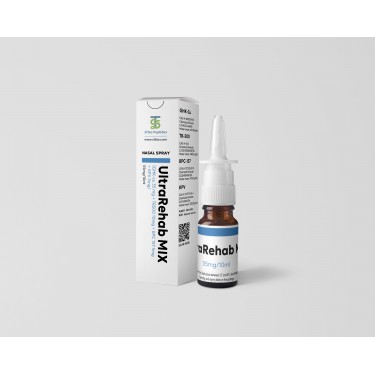
# Understanding Ultra Rehab Mix
Ultra Rehab Mix is a peptide combination built around two compounds that have attracted considerable interest in experimental recovery research: BPC-157 and TB-500. The ZPHC 50 mg formulation is described as containing five vials, with each vial providing 5 mg of BPC-157 and 5 mg of TB-500. The kit also includes 11 mL of bacteriostatic water.
The combination is designed around the idea that different biological pathways involved in tissue recovery may be addressed simultaneously. However, it is important to distinguish research interest from established clinical treatment.
**BPC-157 and Tissue Research**
BPC-157 is a synthetic peptide that has been studied primarily in preclinical settings. Research has explored its potential relationship with processes involved in tissue repair, vascular activity, and inflammatory responses.
One area of interest is angiogenesis, the formation of new blood vessels. Adequate blood supply is an important component of tissue maintenance because oxygen and nutrients must reach areas undergoing repair.
These mechanisms help explain the scientific interest in BPC-157, although experimental findings should not automatically be interpreted as proven therapeutic benefits in humans.
**The Role of TB-500**
TB-500 is another peptide frequently discussed in connection with tissue-repair research. It is associated with pathways involving cellular movement and extracellular matrix remodeling.
The extracellular matrix provides structural support for cells and tissues, and its remodeling is a normal part of many biological processes. Research into thymosin-related mechanisms has therefore generated interest in their possible role in recovery and tissue maintenance.
As with BPC-157, the distinction between laboratory findings and clinically established applications remains essential.
**Why the Two Peptides Are Combined**
The rationale for combining BPC-157 and TB-500 is based on their proposed complementary mechanisms. Product information describes BPC-157 in connection with angiogenesis and blood flow, while TB-500 is associated with cellular migration and extracellular matrix remodeling.
From a research perspective, examining multiple mechanisms at the same time can be useful. Nevertheless, a proposed synergy does not by itself demonstrate that the combination is effective or safe for treating a particular condition.
**Product Composition and Format**
The Ultra Rehab Mix ZPHC formulation is supplied as five individual 10 mg vials. Each vial contains an equal 5 mg amount of BPC-157 and TB-500, giving a combined 10 mg of peptide per vial. The package is also described as containing an 11 mL vial of bacteriostatic water.
The multi-vial format separates the total amount into individual containers, which can be relevant when considering storage and preparation. Specific handling requirements should always be determined from the manufacturer's current instructions.
**Recovery, Mobility, and Physical Stress**
BPC-157 and TB-500 are often discussed in the context of physical recovery, particularly in relation to muscles, tendons, ligaments, and other tissues. The product description specifically associates the combination with injury recovery, post-surgical healing, joint support, inflammation, and rehabilitation following physical stress.
These proposed applications should be viewed cautiously. An association with a biological mechanism or a preclinical finding does not establish that a peptide combination can reliably treat an injury or accelerate recovery in people.
**The Importance of Evidence**
Peptide research can be difficult to evaluate because information available online often combines scientific studies with anecdotal reports. Personal experiences may be interesting, but they cannot substitute for controlled clinical research.
When evaluating compounds such as BPC-157 and TB-500, useful questions include whether evidence comes from human trials, whether findings have been independently reproduced, and whether sufficient information exists about long-term safety.
This distinction is particularly important when a product is being considered for an injury or medical condition.
**Handling and Preparation**
The accompanying administration guide describes the product as a powdered preparation that requires reconstitution. It emphasizes basic sterile practices, including hand washing, cleaning vial surfaces, using appropriate equipment, and gently dissolving the powder rather than shaking it.
Because injectable preparations can be vulnerable to contamination, preparation and storage should be approached carefully. Medical professionals can also provide guidance on whether a particular injectable product is appropriate and how it should be handled.
**Experimental Peptides and Conventional Care**
Interest in experimental peptides should not replace appropriate medical evaluation. An injury, persistent pain, reduced mobility, or prolonged inflammation can have many possible causes, and effective treatment depends on identifying the underlying problem.
For this reason, products containing experimental peptides should not automatically be considered alternatives to established rehabilitation methods, medication, surgery, physical therapy, or other evidence-based approaches when those treatments are medically indicated.
**A Balanced Perspective**
Ultra Rehab Mix illustrates the growing interest in peptide combinations designed around biological processes associated with recovery. Its formulation brings together BPC-157 and TB-500, two compounds that have generated interest in research concerning vascular activity, cellular movement, tissue remodeling, and inflammation.
At the same time, the scientific rationale behind a compound is only one part of evaluating it. Evidence from well-designed human studies, regulatory status, product quality, and safety information are equally important considerations.
**Conclusion**
[Ultra Rehab Mix ZPHC](https://www.ecbt.org/product/ultra-rehab-mix-zphc-50-mg-usa-domestic/) combines BPC-157 and TB-500 in a five-vial format, with each vial containing 5 mg of each peptide. The combination is associated with research into tissue recovery and several biological processes that may contribute to repair.
Its potential should be considered within the limits of current evidence rather than through promotional claims or anecdotal experiences. Anyone dealing with an injury or medical condition should prioritize professional evaluation and evidence-based care, particularly when considering experimental injectable peptide products.